


-
Hardware Option
At Georgia Windows & Doors, we have hand selected hardware for each product series, which can be customized to your desired design.

-
Glass Option
Georgia Windows & Doors collaborate with professional glaziers to provide suitable glass, meeting your personal needs and energy efficiency requirements.

-
Grids Option
At Georgia Windows & Doors, we offer a variety of grids to meet your requirements and ensure compliance with local standards.


-
Hardware Option
At Georgia Windows & Doors, we have hand selected hardware for each product series, which can be customized to your desired design.
-
Glass Option
Georgia Windows & Doors collaborate with professional glaziers to provide suitable glass, meeting your personal needs and energy efficiency requirements.
-
Grids Option
At Georgia Windows & Doors, we offer a variety of grids to meet your requirements and ensure compliance with local standards.
Steel Glass Door
Choosing steel glass doors starts with one key distinction: exterior doors prioritize strength, weather resistance, and thermal performance, while interior doors focus on light, minimal weight, and spatial flexibility.
Published on: 12-11-2026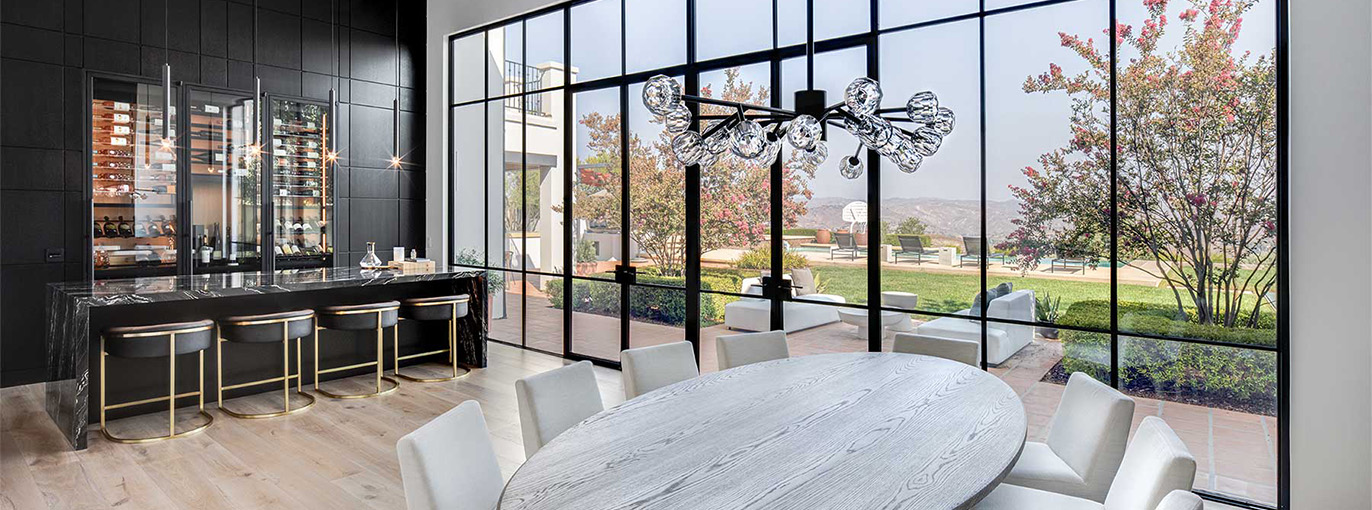
Exterior Steel Glass Doors
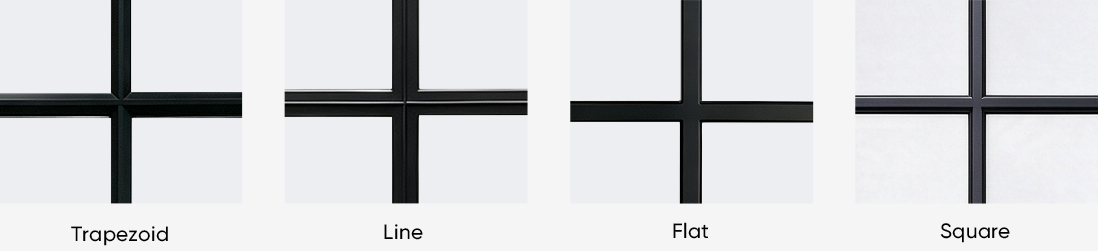
Exterior doors prioritize security, weather resistance, and thermal performance. They typically use a T-shaped grill structure. This design provides space for the glass installation, glazing components, and weather-sealing system. The grille widths typically have a visible face of approximately 20–30 mm, depending on the design and structural requirements. Trapezoidal, square and line grilles support ADL (Authentic Divided Lite).
Common grille profiles include trapezoid, line, flat, and square.
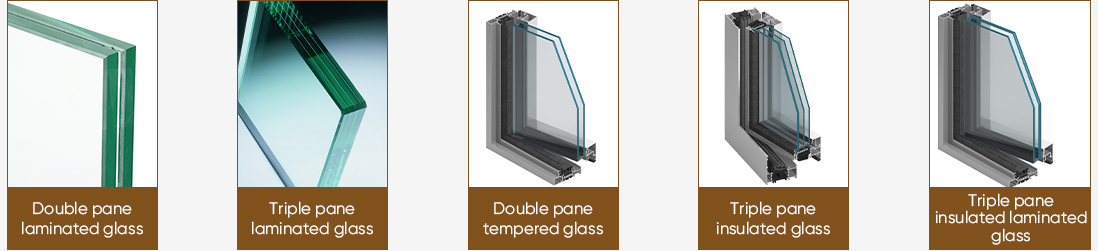
Glass options for exterior applications commonly include:
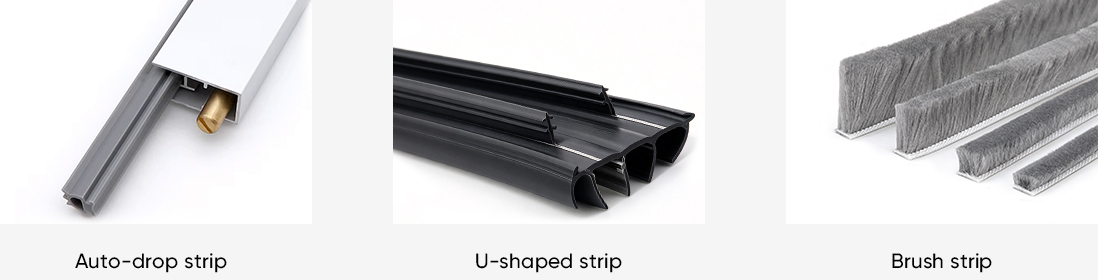
A comprehensive weather strip system:
Entry configurations (single, double, or pivot doors, often with sidelights) establish the home's first impression. Large-format bifold and sliding systems support indoor–outdoor living with wide, flexible openings.
Interior Steel Glass Doors
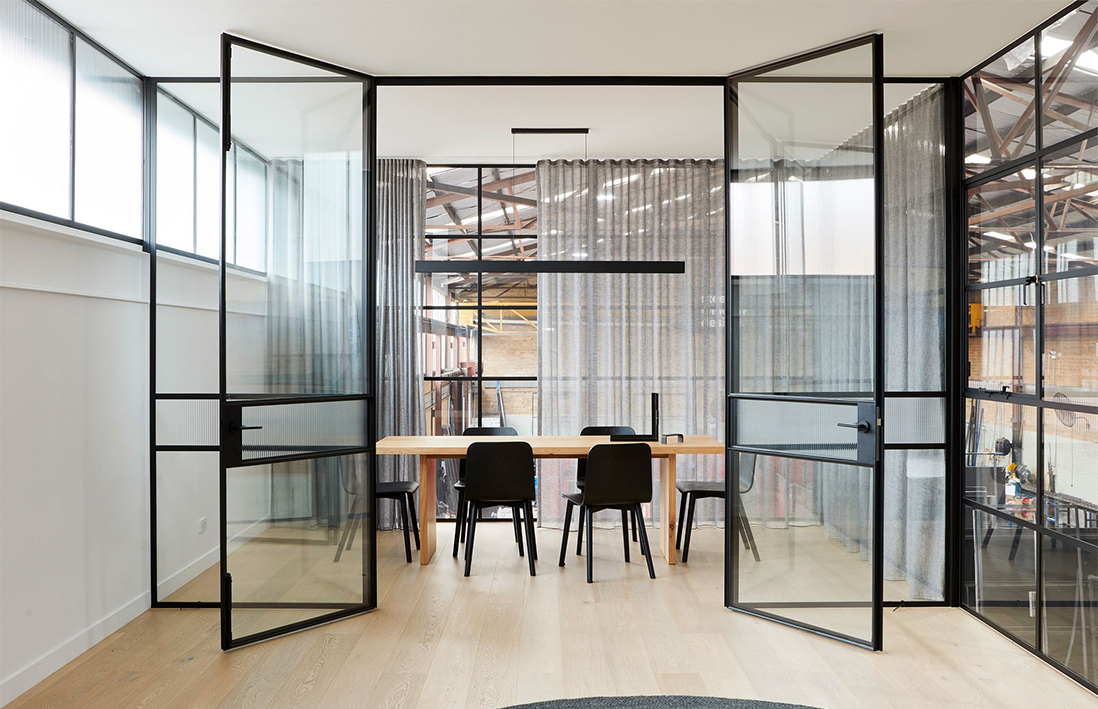
Interior doors focus on spatial definition, light transmission, and design consistency. They are typically executed in a minimalist style.
Common interior types include:
* Swing doors
* Pivot doors
* Barn doors
* Sliding doors
* Shower doors
* Wine cellar doors
These systems are well suited for room doors, partition doors, kitchen doors, pantry doors, and other interior applications where separation and visual continuity are both important.
Construction characteristics for interior doors:
* Slim-profile grilles with a visible face of 10–20 mm
* Glass typically single tempered or double laminated
* Minimalist L-shaped handles
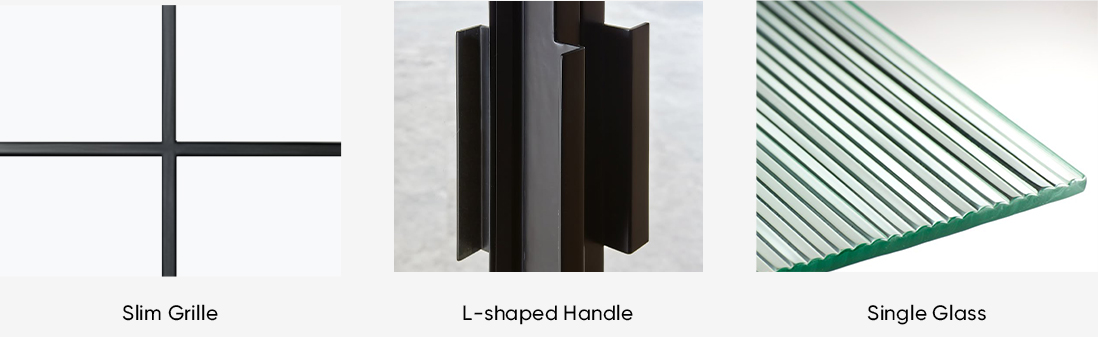
The reduced grille thickness and lighter detailing allow interior doors to maintain an open, refined appearance while still providing structure and definition within the space.
Design and Performance Balance
Successful door selection balances visual impact with practical requirements. Exterior systems emphasize durability, insulation, and weather resistance. Interior systems prioritize lightness, minimal visual interruption, and flexible spatial use.When the appropriate structure, glass, and detailing are matched to each application, steel doors contribute to both the architectural character and the daily functionality of the home.
Frequently Asked Questions
What is the main difference between exterior and interior steel doors?
Exterior doors are built for weather resistance, thermal performance, and security, using thicker griiles and insulated glass. Interior doors prioritize light transmission and minimal visual weight, with slimmer profiles and simpler glass.
What glass is best for exterior steel doors?
Double or triple insulated glass is preferred for thermal efficiency. Laminated options add safety and acoustic performance.
Are interior steel doors suitable for kitchen and pantry use?
Yes. Sliding doors, barn doors, and swing doors with slim profiles work well for kitchen and pantry applications where space efficiency and light flow are important.
Do exterior steel doors need special sealing?
Yes. A proper weather strip system (U-shaped, brush, and auto-drop strips, etc) is critical for air, water, and noise control.
Final Recommendation
Match the door system to its location. Use thermally capable exterior doors with robust sealing for entries and patio openings. Choose slim-profile interior doors when the goal is to define space while preserving light and openness.
Selecting the right steel door is less about style preference and more about aligning structure, glass, and detailing with the specific demands of each space.


